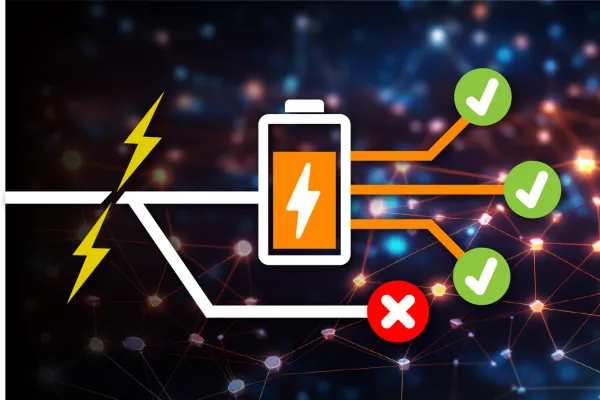
When a major power outage affected millions of people across Spain and Portugal in 2025, businesses experienced first-hand how quickly modern operations can be disrupted when critical infrastructure fails.
While large-scale outages remain rare in the UK, the incident highlighted an important reality: most organisations now depend on internet connectivity, cloud services and digital communications to function.
Which raises an important question:
If your business lost power or connectivity this afternoon, how quickly could you recover?
For many organisations, the answer is less clear than they might like.
Modern Businesses Are More Connected Than Ever
A decade ago, losing internet access was inconvenient.
Today, it can bring an entire business to a standstill.
Modern organisations rely on connected systems for almost everything, including:
- Microsoft 365
- Email and collaboration
- VoIP phone systems
- CRM and customer management platforms
- Cloud file storage
- Video conferencing
- Remote access solutions
- Business-critical applications
These technologies have transformed how businesses operate, enabling hybrid working, improving collaboration and supporting more flexible ways of working.
However, they have also created a greater dependence on reliable infrastructure behind the scenes.
What Happens When Connectivity Fails?
For many businesses, internet connectivity is now as important as electricity.
Without it, employees may lose access to:
- Business phone systems
- Shared files
- Cloud software
- Customer records
- Communication tools
Even a relatively short outage can affect customer service, productivity and revenue.
That's why many organisations are taking steps to improve resilience through measures such as:
- Secondary broadband connections
- Alternative network providers
- 4G and 5G failover solutions
- Automatic failover networking equipment
The objective isn't necessarily to eliminate risk entirely. It's to minimise disruption and maintain operations when a service becomes unavailable.
Your Phone System Is Now Part of Your IT Strategy
Traditional phone systems operated independently from the internet.
Modern VoIP platforms offer significantly more flexibility, but they also make communications resilience an important part of wider IT planning.
Businesses should consider:
- What happens if office connectivity is lost?
- Can calls still be answered?
- Can employees continue working remotely?
- Will customers experience an interruption in service?
Modern cloud-based phone systems can help mitigate these risks through:
- Mobile applications
- Softphones for laptops and desktops
- Intelligent call forwarding
- Alternative routing options
- Multi-device support
When implemented correctly, VoIP can actually improve business continuity by allowing staff to continue working from virtually any location.
Not Everything Lives in the Cloud
Although cloud adoption continues to grow, many businesses still rely on critical infrastructure located on-site.
This can include:
- Physical servers
- Virtual environments
- Network switches
- Firewalls
- File servers
- Industry-specific applications
In these environments, a loss of power can be just as disruptive as a loss of connectivity.
Sudden shutdowns can lead to:
- Data corruption
- Damaged files
- Service interruptions
- Extended recovery times
- Lost productivity
Even a brief interruption can have a lasting impact if systems aren't properly protected.
Why Battery Backup Matters
One of the simplest and most effective ways to improve resilience is through the use of an Uninterruptible Power Supply (UPS).
A UPS provides battery power when mains electricity fails, helping protect critical equipment from unexpected shutdowns.
Depending on the design, a UPS can:
- Keep key systems online during short outages
- Protect equipment from power fluctuations
- Allow servers to shut down safely
- Maintain network connectivity
- Reduce the risk of data loss
Businesses commonly use UPS protection for:
- Servers
- Network switches
- Firewalls
- Internet routers
- VoIP infrastructure
While a UPS won't power an office indefinitely, it provides valuable breathing room during an outage and can significantly reduce downtime and recovery costs.
For many organisations, it's one of the most cost-effective resilience investments they can make.
Resilience Isn't Just About Staying Online
Business continuity isn't only about keeping systems running.
It's also about ensuring your data remains protected and recoverable when something unexpected happens.
A power outage, hardware failure, ransomware attack or simple human error can quickly become a major business problem if there is no recovery plan in place.
Every business should be asking:
- How often is our data backed up?
- Where are backups stored?
- How quickly could we restore critical systems?
- Have our backups been tested recently?
- Could we recover from a ransomware incident?
Business continuity planning is often associated with power cuts and internet outages, but cyber incidents can be equally disruptive. Ransomware attacks, compromised accounts and accidental deletion of critical information can prevent staff from accessing the systems they rely on every day.
That's why backup and disaster recovery planning should be considered an essential part of any business continuity strategy.
Modern backup and disaster recovery solutions can provide:
- Automated backups
- Off-site data protection
- Cloud-based recovery options
- Rapid restoration of critical systems
- Protection against accidental deletion
- Improved resilience against cyber threats
The goal isn't simply to create copies of data. The goal is to ensure your business can continue operating when the unexpected happens.
Related: Data Backup & Disaster Recovery
What Can We Learn From Recent Outages?
One of the key lessons from recent infrastructure disruptions across Europe is that resilience isn't about predicting every possible scenario.
It's about reducing the impact when those scenarios occur.
Organisations that invest in resilient communications, backup connectivity, protected infrastructure and tested recovery procedures are generally far better equipped to respond when problems arise.
True resilience is rarely achieved through a single product or service.
Instead, it's built from multiple layers of protection, including:
- Reliable communications
- Connectivity failover
- Cloud collaboration platforms
- Data backup and recovery
- Protected network infrastructure
- Battery backup systems
- Ongoing IT support
While large-scale outages remain uncommon, smaller incidents occur every day.
The businesses that recover quickest are usually the businesses that prepared beforehand.
Are You Relying on a Single Point of Failure?
One of the most common findings during IT reviews is the presence of a single point of failure.
Examples include:
- One internet connection
- One network provider
- One server
- One router
- One switch
- No battery backup
- No data recovery strategy
For example, many SMEs operate from a single office with one broadband connection, one firewall and no backup connectivity. Everything works perfectly during normal operations, but a fibre fault outside the building can prevent staff from making calls, accessing cloud systems or processing customer requests for several hours.
These situations are often only discovered when something fails.
Identifying and addressing these vulnerabilities can often deliver significant improvements in resilience without requiring major investment.
Business Continuity Starts Before an Emergency
The most resilient businesses don't wait for an outage before reviewing their technology.
Instead, they regularly assess:
- Which systems are critical
- How much downtime is acceptable
- What backup options are available
- Where vulnerabilities exist
- How quickly operations can be restored
The answers often reveal straightforward improvements that strengthen both resilience and day-to-day operations.
Business Continuity Checklist
Before the next outage occurs, ask yourself:
- Do we have more than one internet connection?
- Can staff answer calls if the office is unavailable?
- Are our critical servers protected by a UPS?
- Is our Microsoft 365 data backed up?
- Do we have a tested disaster recovery plan?
- Could we recover from a ransomware attack?
- Do we know our biggest single points of failure?
- How long could we realistically operate without internet access?
- How quickly could we restore critical business systems?
If you're struggling to answer any of these questions, it's probably time for a resilience review.
How Qdos Digital Can Help
At Qdos Digital, we help organisations build resilient technology environments that support business continuity and minimise disruption.
Our services include:
- VoIP phone systems
- Microsoft 365 solutions
- Connectivity and broadband resilience
- 4G and 5G failover services
- Server and network management
- IT support and infrastructure reviews
- UPS and battery backup solutions
- Data Backup & Disaster Recovery services
- Remote and hybrid working technologies
Whether you're concerned about connectivity, communications, infrastructure or data protection, our team can help identify practical steps to improve resilience and reduce risk.
Could Your Business Continue Operating During an Outage?
Business continuity isn't just about preparing for worst-case scenarios. It's about understanding where risks exist and taking sensible steps to reduce them.
Whether you're concerned about VoIP communications, broadband resilience, server protection, Microsoft 365 recovery or backup and disaster recovery planning, Qdos Digital can help identify potential vulnerabilities and recommend practical solutions.